Regulating emotions: how suppressed emotions get stuck in your body
“I don’t know why I react like this, it was really only something small.” I hear that a lot in my practice. Someone tells me about a moment when they were suddenly flooded with anger or sadness, much more than the situation called for. Usually it isn’t about that one moment at all, but about everything that was already there and was never allowed to be felt.
An emotion starts in your body
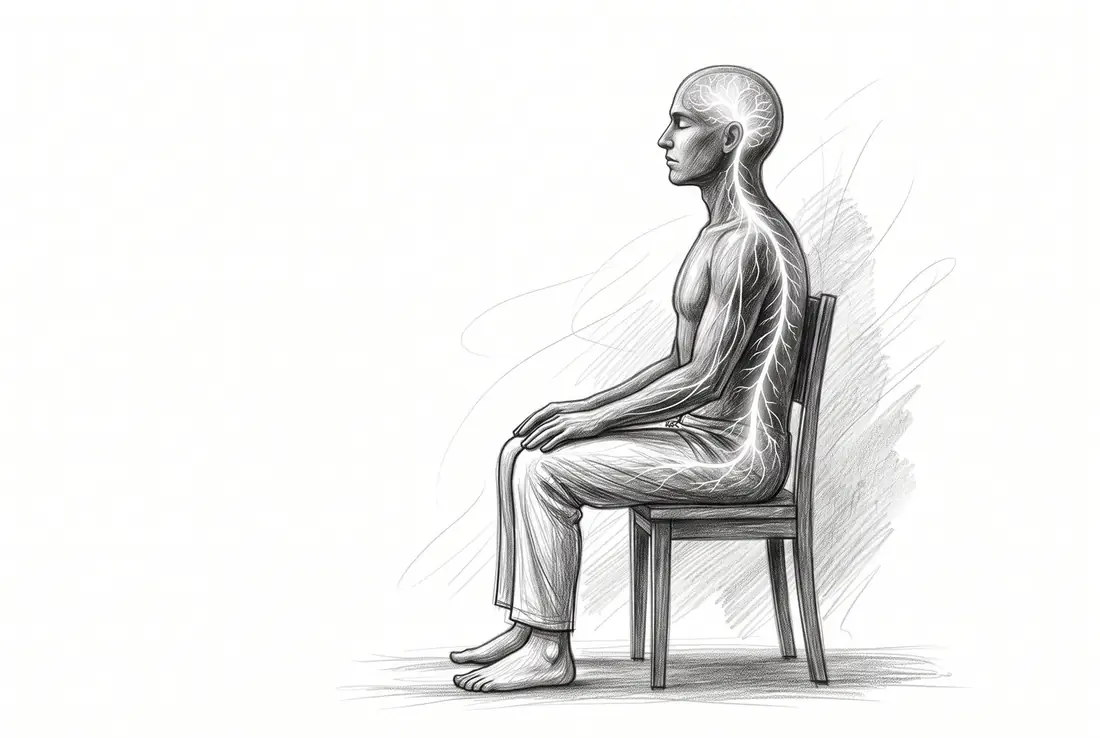
We tend to think of emotions as something that happens in our head, but every emotion actually starts as a sensation in the body. Anger might feel like heat or pressure in your chest or arms, sadness more like a lump in your throat or a heaviness around your eyes. Only after that does your mind give it a name and a story.
That matters, because it means you can reach an emotion through your body and not only by thinking about it.
What happens when you suppress emotions
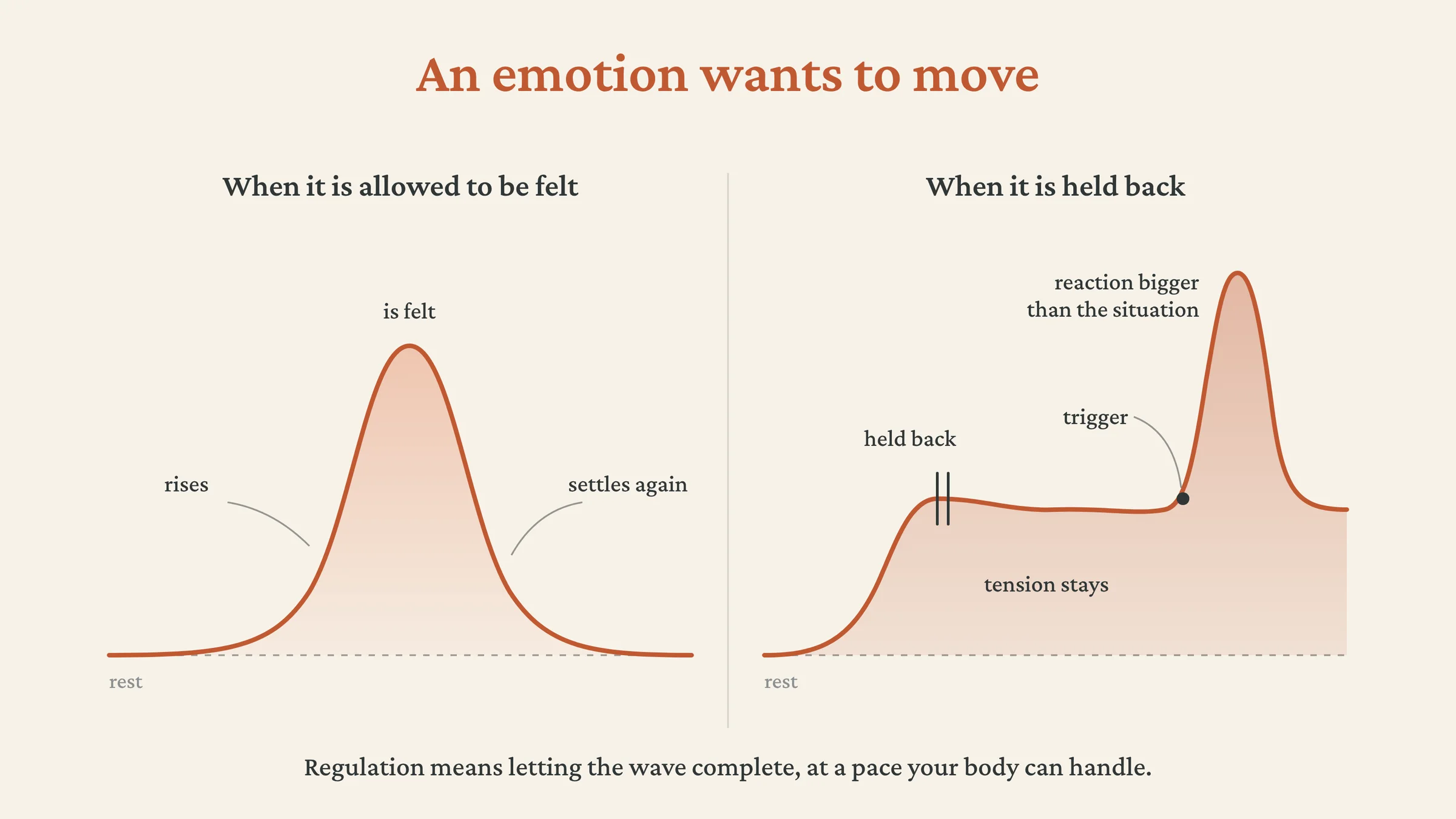
An emotion is really energy that wants to move. When it is allowed to be there, it rises and settles again, often faster than you would expect.
Most of us, though, learned to hold emotions back. Maybe because anger wasn’t safe at home, because sadness was seen as weakness, or simply because there was no room for it. So we tense up. We hold our breath, pull up our shoulders or clench our jaw. In that moment your nervous system is protecting you, but the energy stays in your body.
Peter Levine, the founder of Somatic Experiencing, describes how survival energy that couldn’t complete stays in the body and keeps activating the system. Something similar happens with suppressed emotions. After a while that tension simply feels normal, or you notice you don’t feel very much anymore. For some people it turns into functional freeze, where you keep functioning but very little really lands.
I lived like that for a long time myself. Everything seemed under control, but my body was holding on to a lot without me noticing.
Why a trigger can feel so big
A trigger opens a door to what was already there. You aren’t only reacting to what is happening right now, but also to everything your body stored in similar situations. That’s why a small remark can stir up so much, and why you sometimes feel like you lose yourself for a moment.
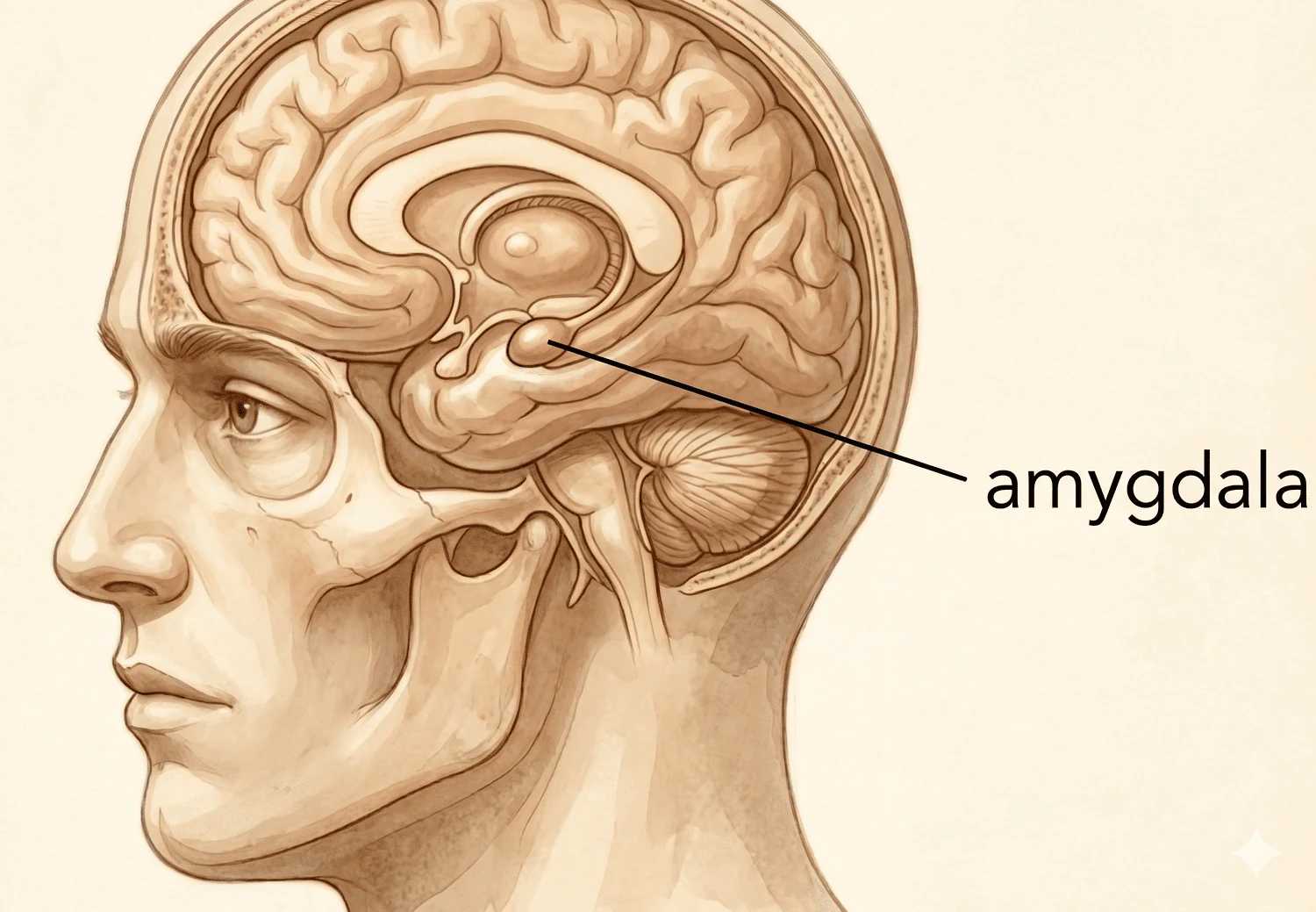
Your body doesn’t separate then from now, that memory works without words. And when your window of tolerance is already narrower because of stress or tiredness, you move outside it even faster.
Emotions come in layers
What I see very often in sessions is that an emotion rarely comes alone. There are usually several layers on top of each other.
Someone comes in frustrated about a colleague, for example. When we slow down and feel what is happening in the body, there is sometimes something else underneath that frustration, like the feeling of not being seen. And underneath that there may be an older sadness, or a fear of not belonging.
That doesn’t mean anger is always a cover. Often anger itself is what got stuck, an impulse to protect yourself or to set a boundary that wasn’t allowed back then. When you give that anger a voice in a safe setting, feel how it wants to move in your arms or your jaw, or let yourself say “no” out loud, you often notice your body getting more space. Feeling anger and letting it move is something very different from lashing out, and that difference is exactly where regulation happens.
You can notice these layers in the body too. First maybe a tight jaw, then some warmth in your chest, and if you stay with it for a moment, a heaviness in your throat.
Feeling through the layers with Somatic Experiencing
In Somatic Experiencing we don’t go digging or try to bring everything up at once. We work with a small piece at a time, with whatever your body is showing in that moment.
We always start with some safety. That can be a place in your body that feels calm, the contact with the chair, or something in the room your eyes like to rest on. Those resources are needed, because without that anchor feeling quickly becomes too much.
From there we look at one layer. Where do you feel it, how big is it, is it warm or more tight? You don’t need to put a name on it yet. Then you go to that tension for a moment and back to what feels calm, back and forth. That’s how your nervous system learns it can feel an emotion without being overwhelmed.
Sometimes a deep sigh comes, some trembling, warmth or tears. That is your body releasing held energy, at its own pace and without you having to force anything. Often the next layer becomes visible after that, and so you work your way down step by step.
So for me, regulating emotions isn’t about keeping them under control. It’s about teaching your nervous system that it can feel an emotion, carry it and let it go again.
A small exercise to start with
The next time you notice you’re triggered, try this. Put your feet on the floor and feel the contact for a moment, a form of grounding. Then don’t ask yourself why you feel this way, but where you feel it in your body. Describe it to yourself in simple words, warm, tight, pressure, whatever comes.
Then look around the room for a moment and let your eyes rest on something you find pleasant. Go back to the sensation and notice whether anything has changed, even if only a little.
You don’t have to solve anything. You’re simply letting your body know it’s allowed to be there.